
Higher Education Transformation Toward an Entrepreneurial University: Philosophical, Theoretical, and Practical Frameworks
Significant challenges include limited research and innovation capacity, financial constraints, resistance to internal change, and social issues. This study extends the understanding of entrepreneurial universities by identifying the complex interplay between internal and external factors as drivers and inhibitors of transformation. This transformation is essential for increasing the relevance of higher education and its contribution to regional economic development.
INTRODUCTION
Global higher education institutions face profound pressure to adapt to rapidly evolving socioeconomic and technological landscapes. The traditional roles of universities, focusing solely on teaching and fundamental research, are expanding to encompass direct contributions to economic development and societal well-being. This shift necessitates institutions evolving into entrepreneurial universities, fostering innovation, commercializing research, and cultivating an entrepreneurial mindset among students and staff (Dal-Soto et al., 2021). Universities increasingly recognize their pivotal role as engines of innovation, regional development, and sources of skilled talent capable of creating new ventures. The demand for graduates equipped with entrepreneurial competencies, critical thinking, and adaptability requires a paradigm shift in how higher education institutions operate and contribute to society.
Academic discourse has extensively explored the concept of the entrepreneurial university since its late 20th-century emergence. Initial conceptualizations highlighted a crucial shift from the traditional ivory tower model towards institutions deeply integrated with industry and regional innovation systems (Bikse et al., 2016). Early scholarly investigations predominantly focused on mechanisms of technology transfer, spin-off creation, and intellectual property management as core entrepreneurial activities. Research trajectories subsequently broadened, examining institutional culture, leadership styles, and strategic alignment necessary for nurturing an entrepreneurial environment (Fantauzzi et al., 2019). Scholars have also investigated the development of entrepreneurial curricula and pedagogical approaches aimed at embedding essential entrepreneurial skills across diverse disciplines. The multifaceted nature of this transformation has generated diverse perspectives on its implementation, effectiveness, and impact on various stakeholders.
Despite substantial scholarly attention, the extant literature presents a fragmented and often inconsistent understanding of the entrepreneurial university model. Conceptual clarity frequently varies, with studies emphasizing distinct aspects such as commercialization, regional engagement, or internal entrepreneurial culture. Implementation strategies demonstrate considerable heterogeneity across geographical regions and institutional types, often leading to inconsistent outcomes. For instance, while some research highlights the success of university-industry collaborations in developed economies (Genç et al., 2020), other investigations reveal significant barriers impeding such partnerships in emerging contexts. A pervasive absence of standardized metrics for accurately measuring entrepreneurial university performance complicates rigorous comparative analysis and frequently obscures effective practices.
Theoretical frameworks often remain conceptually siloed, addressing either philosophical underpinnings, organizational theories, or practical guidelines without a cohesive, integrative perspective. Bezanilla et al. (2020), for example, focused on entrepreneurial competencies in engineering students, while Iwara examined broader institutional readiness in African contexts, illustrating this divergence.
A critical and persistent gap manifests in the systematic integration of the philosophical rationale, theoretical foundations, and practical implementation dimensions underpinning the complex entrepreneurial university transformation. Existing literature reviews frequently concentrate on isolated facets, such as entrepreneurial education or technology transfer, without comprehensively synthesizing the broader conceptual landscape. The philosophical rationale, its grounding in established organizational and economic theories, and its tangible manifestation in institutional policies and operational practices have not yet been sufficiently consolidated into a single, cohesive framework. Consequently, university leaders and policymakers often lack a comprehensive, evidence-based understanding of the multifaceted elements required for a successful and sustainable transformation. A truly consolidated view is indispensable for effectively navigating inherent complexities and ensuring consistent alignment across institutional levels.
The fragmented and disparate nature of current literature emphatically necessitates a rigorous Systematic Literature Review (SLR). An SLR offers a robust approach to systematically identify, evaluate, and comprehensively synthesize all relevant scholarly studies concerning the intricate transformation of higher education institutions towards the entrepreneurial university model. This methodical approach uncovers underlying patterns, elucidates contradictions, and highlights critical emerging themes that isolated studies might overlook, yielding a more holistic understanding. A rigorous SLR effectively bridges conceptual and practical gaps by integrating diverse research findings, presenting a clearer picture across various global contexts and theoretical lenses. The systematic methodology facilitates consolidation of dispersed knowledge, establishing an evidence-based foundation for future academic inquiry and practical institutional interventions.
This current study aims to precisely address the identified research gaps through a comprehensive Systematic Literature Review focused on the transformation of higher education institutions towards the entrepreneurial university model. Specifically, the research pursues three primary objectives. First, the study seeks to identify and map the main trends and inherent characteristics of this institutional transformation documented within recent scientific literature. Second, the investigation intends to examine the key benefits and pivotal driving factors that motivate higher education institutions to adopt the entrepreneurial university model. Third, the research endeavors to explore the significant challenges and pervasive obstacles consistently encountered by universities throughout their transformation process towards becoming entrepreneurial entities. These objectives align directly with the proposed research questions, guiding a structured and in-depth review of the scholarly landscape.
The synthesized findings from this Systematic Literature Review will offer substantial contributions to both academic discourse and practical institutional implementation. Academically, the integrated framework, encompassing philosophical, theoretical, and practical dimensions, will provide a more coherent understanding of the entrepreneurial university concept, serving as a robust foundation for guiding future scholarly inquiry. Practically, university leaders, policymakers, and institutional stakeholders can utilize the synthesized insights to inform strategic planning, develop effective policies, and implement targeted initiatives for fostering entrepreneurial ecosystems. The clear identification of specific benefits, crucial driving factors, and persistent challenges will equip practitioners with invaluable evidence-based guidance, facilitating more informed decision-making and enhancing the success rate of transformation efforts. Ultimately, this study contributes to advancing discourse on the evolving role of higher education in the 21st-century knowledge economy.
METHODS
The present systematic literature review adopted the PRISMA framework (Preferred Reporting Items for Systematic Reviews and Meta-Analyses) to ensure a rigorous and transparent methodology. This approach systematically identifies, screens, evaluates, and synthesizes relevant literature, providing a comprehensive understanding of the transformation towards entrepreneurial universities. The review focused on articles published between 2010 and 2026, capturing contemporary trends and developments in the field. Four prominent academic databases, Scopus, ScienceDirect, Google Scholar, and DOAJ, served as primary sources for article identification, maximizing coverage of peer-reviewed publications.
A comprehensive search strategy employed specific keyword combinations and Boolean operators to retrieve pertinent studies. Search strings included: "Entrepreneurial University" AND transformation; "University Transformation" AND "Entrepreneurial University"; "Entrepreneurial University" AND (framework OR model OR strategy); and "Entrepreneurial University" AND (philosophical OR theoretical OR practical). Inclusion and exclusion criteria guided the selection of relevant articles, ensuring the focused scope of the review. Table 1 details these criteria.
Table Methods
|
Criteria |
Inclusion |
Exclusion |
|
Publication Type |
Articles published in scientific journals or conference proceedings. |
Publications other than scientific journals or conference proceedings (e.g., books, book chapters, theses, dissertations, reports, blogs, news articles). |
|
Topic Relevance |
Articles discussing the transformation of higher education institutions towards entrepreneurial universities. |
Articles not specifically addressing the transformation of higher education institutions towards entrepreneurial universities. |
|
Conceptual Focus |
Articles identifying philosophical, theoretical, or practical frameworks related to entrepreneurial universities. |
Articles not identifying philosophical, theoretical, or practical frameworks concerning the topic. |
|
Language & Access |
Articles available in full-text and published in English or Indonesian. |
Articles unavailable in full-text or not published in English or Indonesian. |
|
Publication Year |
Articles published between 2010 and 2026. |
Articles published outside the 2010–2026 range. |
The systematic identification and selection of studies followed the PRISMA flow diagram. An initial database search yielded 484 articles. Specifically, Scopus contributed 205 articles, ScienceDirect 123, Google Scholar 88, and DOAJ 68. Duplicates totaling 126 were subsequently removed, resulting in 358 unique articles. Title and abstract screening led to the exclusion of 278 articles that did not meet the initial relevance criteria.
Full-text assessments were then performed on the remaining 80 articles. Of these, 55 articles were excluded due to insufficient thematic alignment or methodological limitations, yielding a final selection of 25 articles for comprehensive analysis.
Article quality assessment represented a critical step in ensuring the robustness of the included literature. Each selected article underwent evaluation based on five criteria: topic relevance, clarity of methodology, clarity of data/sample, clarity of results, and contribution to the field. A three-point Likert scale (1 = low, 2 = medium, 3 = high) was used for this assessment. Articles receiving consistently low scores were subsequently excluded to maintain research integrity. The final set of 25 articles demonstrated an average quality score of 2.4 out of 3.
Data extraction from the selected articles involved systematically abstracting key information such as theoretical foundations, conceptual models, practical strategies, and findings related to entrepreneurial university transformation. Thematic synthesis served as the primary analytical technique, allowing for the identification of recurring patterns, core themes, and overarching insights across the diverse body of literature.
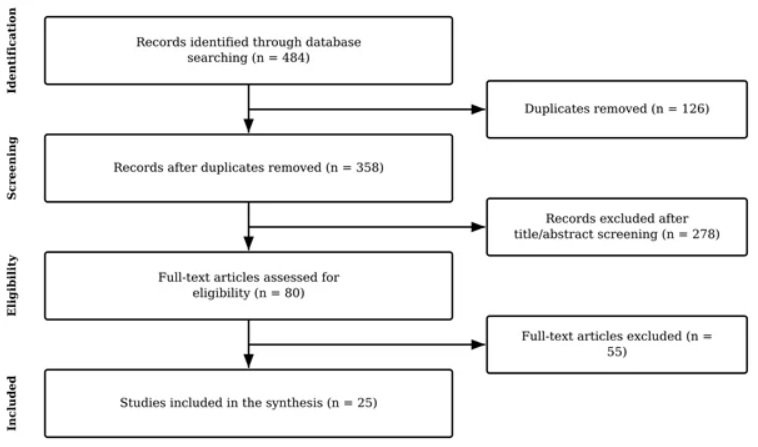
Gambar Methods
RESULTS
The systematic literature review identified 484 potential records, with 126 duplicates removed, leaving 358 unique articles for initial screening. During title and abstract screening, 278 articles were excluded as irrelevant, resulting in 80 for full-text assessment. After detailed evaluation, 55 further articles were excluded for not meeting inclusion criteria, yielding a final corpus of 25 articles for synthesis.
3.1.1 Article Characteristics
Table Article Characteristics
|
Aspect |
Finding |
|
Final articles analyzed |
25 |
|
Year range |
2010–2026 |
|
Dominant countries |
Not specified, Indonesia, Italy, Brazil, Sweden |
|
Dominant methods |
Quantitative, Multiple case study, Qualitative, Comparative analysis, Quantitative, Survey |
|
Dominant themes |
Student Learning Outcomes and Entrepreneurial Skills, Leadership, Policy, and Institutional Culture, External Collaboration and Innovation Ecosystem Development |
3.1.2 Publication Trend
The 25 articles show increased interest in the entrepreneurial university paradigm. Early contributions were sparse (one article each in 2010, 2012, 2016, 2017, and 2018). Research output rose in 2019 (two publications), followed by three in 2020. Scholarly interest peaked in 2021 with five articles, showing significant acceleration. While 2022 saw three publications and 2023 yielded one, projections for 2024, 2025, and 2026 suggest a renewed surge, with one, one, and four articles respectively, indicating sustained future engagement.
3.1.3 Data Extraction Table
|
No. |
Author (Year) |
Country |
Method |
Key Findings |
|
1 |
Dal-Soto et al. (2021) |
Brazil, Sweden |
Multiple case study |
Top management decisions play a key role in shaping entrepreneurial orientation (EO) in universities, through varying levels of participation but with recurring patterns in the implementation of the third academic mission. |
|
2 |
Sadigova et al. (2026) |
Azerbaijan |
Qualitative, comparative analysis |
Universities in Azerbaijan remain largely education-oriented, with limited research and innovation capacity, weak university–private sector collaboration, and underdeveloped technology transfer and faculty entrepreneurship mechanisms. |
|
3 |
Aripradono et al. (2024) |
Indonesia |
Quantitative, survey |
The integration of educational technology and digital transformation in higher education has significant implications for teaching methods, administrative efficiency, and the educational environment, while emphasizing collaboration and responsiveness to market needs. |
|
4 |
Awad & Salaimeh (2023) |
Palestine |
Quantitative |
The implementation of entrepreneurship at PPU is relatively strong in terms of curriculum alignment with labor market needs, community relations, academic exchange, entrepreneurial culture, entrepreneurship education, and university internationalization. However, university policies, scientific research, innovation, and university leadership remain at a moderate level, while the university environment is below a moderate level. |
|
5 |
Fantauzzi et al. (2019) |
Italy |
Qualitative |
Most Italian universities engage in merchandising strategies; however, there is currently insufficient information to evaluate their effectiveness in higher education, and only hypotheses can be formulated. |
|
6 |
Iwara & Kilonzo (2022) |
South Africa |
Exploratory qualitative case study |
Five conditions emerged as key findings: (1) the development of entrepreneurial knowledge and skills; (2) the integration of indigenous entrepreneurial systems; (3) engaged scholarship; (4) value creation and enterprise development; and (5) the embedding of resourceful stakeholders in university value-chain networks. |
|
7 |
Aravena et al. (2021) |
Chile |
Participatory dialogue analysis |
The emergence of transdisciplinarity, along with related opportunities and barriers, is connected to the historical, organizational, and cultural dynamics of institutions and the higher education sector in Chile. These dynamics include social commitment, the promise of innovation, and demands for reform of the higher education system. |
|
8 |
Rıana et al. (2026) |
Indonesia |
Ethnography |
The transformation process unfolds through four key stages: initiation, experimentation, consolidation, and institutionalization. Its success is influenced by strategic leadership, institutional structures, entrepreneurial culture, and actor dynamics. |
|
9 |
Hayati et al. (2026) |
Indonesia |
Qualitative, Soft Systems Methodology (SSM) |
Efforts to move toward an entrepreneurial university orientation are shaped by the interrelationships among academic activities, innovation, and entrepreneurship. These relationships create conditions that support the development of innovation and entrepreneurship initiatives linked to institutional sustainability. |
|
10 |
Bezanilla et al. (2020) |
Spain |
Quantitative |
University contextual factors have only a limited influence on internal factors, whereas internal resources are moderately or strongly correlated with the processes universities implement to promote entrepreneurship, particularly the inclusion of entrepreneurship in university missions, strategies, policies, and procedures. |
|
11 |
Genç et al. (2020) |
Turkey |
Content analysis |
Most universities in Turkey do not yet exhibit the characteristics of entrepreneurial universities, but they have a strong intention and desire to transform in that direction. |
|
12 |
Stavytskyy et al. (2019) |
Ukraine |
Quantitative |
A 1% increase in government expenditure leads to a 0.375-point increase in the Global Innovation Index over four years, while each additional 1% of people employed in new technologies increases the Global Innovation Index by 0.75 annually. However, Ukraine’s educational environment does not contribute to the development of innovative and entrepreneurial universities. |
|
13 |
Iwara (2025) |
Africa |
Qualitative case study |
The three main dimensions of this pathway are: (1) curriculum alignment to develop advanced qualifications and skills that match industry demand and local economic priorities; (2) stakeholder engagement, through which universities partner with local organizations and alumni; and (3) innovation centers that provide entrepreneurial support, real-world experience, and indigenous entrepreneurial practices. |
|
14 |
Bikse et al. (2016) |
Latvia |
Experience analysis, survey |
There is a positive trend in the provision of student business incubator services and collaboration among higher education institutions (HEIs), local governments, and entrepreneurs in Latvia. However, no similar trend is evident in the development of entrepreneurial universities. The survey indicates that greater efforts are needed to help young entrepreneurs build collaborative networks and strengthen joint knowledge creation. |
|
15 |
Xavier & Ghina (2022) |
Not specified |
Mixed methods (quantitative and qualitative) |
Of the eight aspects evaluated, three require faculty attention and improvement because respondents gave them low scores in relation to the entrepreneurial university agenda: Entrepreneurship Teaching and Learning, Digital Transformation and Capabilities, and Impact Measurement. |
|
16 |
Taylor (2012) |
United Kingdom |
Interview study |
This study confirms that the entrepreneurial culture identified by Clark 15 years earlier persists at the University of Warwick. It also highlights the importance of distinguishing commercialism from Clark’s concept of entrepreneurship. |
|
17 |
Salam et al. (2026) |
Indonesia |
Qualitative, case study |
Institutional change follows a structured process involving the phases of preparation, transition, and stabilization. Key barriers—including financial constraints, human resource readiness, regulatory compliance, and cultural adaptation—are addressed through collegial leadership, strategic institutional development, and the internalization of Al-Islam and Muhammadiyah values. |
|
18 |
Gaiaschi (2021) |
Italy |
Mixed methods (administrative data, qualitative interviews) |
The implications of university transformation for gender heterogeneity are complex. Early-career employment precarity increases gender inequality by reducing women’s access to permanent positions, while the adoption of performance-based practices has mixed consequences, involving both risks and opportunities, and may even disrupt male-dominated hierarchies. |
|
19 |
Vuolanto (2017) |
Finland |
Analysis using the social worlds framework |
The transformation thesis only partially captures perceptions of the relationship between nursing science and society. This article proposes drawing on other literature to analyze interactions between universities and society, particularly in disciplines oriented toward professional practice. |
|
20 |
Klucznik-Tӧrő (2021) |
Not specified |
Systematized literature review, conceptual model development |
This paper redefines several relevant core terms, such as “entrepreneurship education” and its “progression model,” and offers broad practical and theoretical applications. |
|
21 |
Ибатов et al. (2021) |
Kazakhstan |
Conceptual analysis |
There is a clear need in the Republic of Kazakhstan to implement the “University 3.0” concept. Comprehensive measures are required to accelerate innovation, ensure the quality of higher education, and improve the prestige and salary levels of academic staff. |
|
22 |
Novela et al. (2020) |
Not specified |
Analysis of existing models |
An analysis of existing models shows that universities should not merely achieve outputs; they must also focus on clearly defined outcomes so that their contribution to economic growth becomes more tangible. |
|
23 |
Shattock (2010) |
Europe |
Review and conceptual analysis |
Clark’s work has had a significant impact on how European universities understand the balance between institutional autonomy and state control. It also raises important questions about the relationship between organizational frameworks and the conduct of academic work. |
|
24 |
Coşkun et al. (2022) |
Not specified |
Mixed methods (quantitative systematic literature review, qualitative semi-structured interviews) |
Conceptualization is essential to understanding entrepreneurial universities, which are viewed as institutions that serve students and companies through various channels, such as research reports, academic publications, and patents. |
|
25 |
Fleacă et al. (2018) |
Not specified |
Application of the Process Scoping Diagram, SIPOC method |
The authors applied a Process Scoping Diagram to capture and conceptualize the educational model needed to guide higher education institutions (HEIs) through changes in their day-to-day operations and to share perspectives on the model’s scalability. |
3.1.4 Thematic Findings
3.1.4.1 Hasil Belajar dan Keterampilan Kewirausahaan Mahasiswa
The transformation towards an entrepreneurial university fundamentally reorients the educational paradigm to directly foster essential entrepreneurial knowledge and skills among students. This is primarily achieved through a deliberate alignment of the curriculum with the evolving demands of industry and the broader labor market, ensuring graduates possess up-to-date and relevant competencies (Bezanilla et al., 2020). The emphasis extends beyond traditional disciplinary knowledge to include transversal skills critical for entrepreneurial success, such as problem-solving, critical thinking, creativity, and adaptability (Genç et al., 2020). Pedagogical approaches often shift from passive learning to active, experiential methods, including project-based learning and internships, to translate theoretical knowledge into actionable skills. This re-engineering influences not only individual student trajectories but also national economic competitiveness.
By continuously updating curricula to reflect cutting-edge industry practices and emerging market trends, entrepreneurial universities proactively address skill gaps and future workforce needs. This responsive approach helps ensure a robust human capital pipeline, supplying industries with qualified individuals possessing both technical expertise and entrepreneurial acumen to drive innovation and sustain economic growth. The ultimate aim is to produce graduates who are capable of contributing to economic development and societal advancement through innovation and new venture creation (Iwara, 2025).
3.1.4.2 Kepemimpinan, Kebijakan, dan Budaya Institusional
The successful transformation of a traditional higher education institution into an entrepreneurial university is critically dependent on robust strategic leadership and unwavering support from top management (Sadigova et al., 2026). Such leadership is instrumental in articulating a clear vision, securing necessary resources, and fostering an environment conducive to innovation and risk-taking. Without a strong commitment from the highest levels, initiatives often falter due to a lack of institutional legitimacy or insufficient resource allocation, underscoring the leaders' role as catalysts for change aligned with overarching strategic goals (Aripradono et al., 2024). Complementing this leadership, the systematic formulation of clear internal policies, strategies, and operational procedures is paramount. These frameworks provide guidelines and incentives to integrate entrepreneurial activities across all facets of the university, from research and teaching to external engagement (Dal-Soto et al., 2021). This includes formalizing intellectual property policies and funding mechanisms for ventures, thus operationalizing the entrepreneurial mission.
Crucially, an entrepreneurial culture, characterized by a collective mindset that values innovation, creativity, proactivity, and learning from failure, must permeate the institution. Fostering this culture involves encouraging interdisciplinary collaboration and platforms for experimentation, shifting from a purely academic ethos to one embracing dynamic, outcome-oriented entrepreneurial principles (Bikse et al., 2016).
3.1.4.3 Kolaborasi Eksternal dan Pengembangan Ekosistem Inovasi
The evolution into an entrepreneurial university inherently requires deep and multifaceted engagement with external stakeholders, including industry partners, governmental bodies, and local communities (Awad & Salaimeh, 2023). These symbiotic partnerships facilitate mutual learning, resource sharing, and co-creation of knowledge, offering universities insights into market needs and technological trends, while providing businesses access to academic expertise and innovative talent. Government partnerships, vital for funding and policy support, help create regulatory frameworks conducive to entrepreneurial activity. Central to this engagement is the development of a robust innovation ecosystem, which typically includes incubator services, dedicated innovation centers, and technology transfer offices. These hubs nurture nascent ventures, support spin-offs, and commercialize research outputs by providing mentorship, shared workspaces, and funding access (Fantauzzi et al., 2019).
The strategic integration of digital technologies further enhances this ecosystem, facilitating virtual collaboration, remote mentorship, and wider dissemination of research (Iwara & Kilonzo, 2022). Ultimately, these collaborations and the sophisticated ecosystem ensure academic knowledge translates into tangible economic and societal benefits (Stavytskyy et al., 2019).
3.1.4.4 Tantangan dan Kendala dalam Proses Transformasi
The transformation into an entrepreneurial university is frequently challenged by both internal capacity limitations and external structural impediments. Internally, a significant hurdle often lies in the existing research and innovation capacity, alongside the readiness of human resources (Aravena et al., 2021). Universities may lack established infrastructure or specialized expertise for commercially viable research, and faculty/staff may require extensive training in entrepreneurial skills. Externally, financial constraints are pervasive, as entrepreneurial initiatives demand significant capital investment which may not be readily available, particularly for public institutions (Rıana et al., 2026). Navigating complex regulatory compliance, especially for intellectual property and spin-off formations, also presents arduous and time-consuming bureaucratic hurdles. Beyond these, inherent dynamics of institutional culture and broader social issues present another layer of complexity.
Deep-seated academic cultures, prioritizing basic research over commercialization, can resist the entrepreneurial shift, manifesting as skepticism or opposition from faculty who perceive entrepreneurship as detracting from core academic missions (Hayati et al., 2026). Moreover, social issues such as gender inequality can exacerbate these challenges by limiting participation and recognition of women in entrepreneurial roles. This underscores the critical need for inclusive policies and robust support systems to ensure equitable opportunities for all members of the university community.
3.1.4.5 Celah Penelitian dan Arah Pengembangan Konseptual
Despite growing literature, significant research gaps persist in the rigorous evaluation of entrepreneurial strategy effectiveness and the precise measurement of university transformation impact. Many studies describe initiatives but lack empirical evidence quantitatively assessing long-term outcomes, such as the economic contribution of spin-offs or career success of entrepreneurially educated graduates (Dal-Soto et al., 2021). Future research needs robust longitudinal designs and standardized metrics to provide a clearer understanding of the return on investment and societal benefits from these transformative efforts. Furthermore, a more refined and comprehensive conceptualization of the entrepreneurial university is needed, moving beyond descriptive case studies. This includes developing sophisticated theoretical models for entrepreneurial education that delineate effective pedagogical approaches for diverse contexts (Iwara, 2025), and clarifying how entrepreneurial universities interact with society and contribute to regional development. Research should also investigate specific processes and governance structures that foster genuinely productive co-creation of knowledge, both internally and externally (Rıana et al., 2026).
Addressing these gaps will advance theoretical understanding and offer actionable insights for universities globally seeking to enhance their entrepreneurial mission and societal relevance.
DISCUSSION
The transformation of higher education institutions into entrepreneurial universities represents a strategic imperative, driven by global economic shifts and the evolving demands of the job market. This systematic literature review synthesized findings from recent scholarship to delineate key characteristics, driving factors, and persistent challenges within this paradigm shift. Insights gathered contribute to a comprehensive understanding of the philosophical, theoretical, and practical underpinnings of entrepreneurial universities. The included studies span various geographic and institutional contexts, revealing both convergent and divergent trends in their journeys toward fostering innovation and entrepreneurship.
4.1.1 Student Learning Outcomes and Entrepreneurial Skills
Universities increasingly prioritize the development of essential entrepreneurial knowledge and skills among their students, directly aligning curricula with industry and labor market needs. This focus ensures graduates possess up-to-date qualifications and relevant competencies for dynamic professional environments. Numerous studies highlight the integration of entrepreneurial education, emphasizing not only business acumen but also critical thinking, problem-solving, and adaptability (Bezanilla et al., 2020; Genç et al., 2020). Curricular innovations frequently involve project-based learning, internships with startups, and mentorship programs designed to cultivate an entrepreneurial mindset from an early stage in students’ academic careers. Graduates from these programs demonstrate enhanced capabilities to identify opportunities, manage risks, and initiate new ventures.
Empirical evidence demonstrates that students exposed to entrepreneurial education exhibit higher levels of self-efficacy and a greater propensity for entrepreneurial careers. Aravena et al. (2021) indicated that specific pedagogical approaches, such as experiential learning and exposure to real-world business challenges, are particularly effective in fostering these outcomes. Furthermore, the development of digital and soft skills, alongside core disciplinary knowledge, equips students to navigate complex and rapidly changing professional landscapes. Institutions effectively integrating entrepreneurial skills into their core offerings prepare graduates not only for traditional employment but also for creating their own economic opportunities, addressing RQ1 and RQ2 by illustrating a primary benefit and characteristic of this transformation.
4.1.2 Leadership, Policy, and Institutional Culture
Successful transformation into an entrepreneurial university critically hinges on strategic leadership and robust support from top management. This process is further bolstered by the articulation of clear internal policies, strategies, and procedures that establish a framework for entrepreneurial activities. Instituting a pervasive entrepreneurial culture throughout the institution ensures broad participation and commitment (Bikse et al., 2016). Leaders play a pivotal role in championing innovation, allocating resources, and fostering an environment where risk-taking and experimentation are encouraged rather than penalized.
Developing an entrepreneurial culture necessitates a shift from traditional academic norms to those that value commercialization, societal impact, and interdisciplinary collaboration. This often involves revising promotion criteria, establishing dedicated innovation offices, and creating incentives for faculty and students to engage in entrepreneurial endeavors. Sadigova et al. (2026) underscored the importance of leadership’s visionary role in overcoming inertia and resistance to change within established academic structures. Effective policies guide resource allocation, intellectual property management, and partnership development, ensuring institutional coherence in its entrepreneurial mission. This sub-section directly addresses RQ1 and RQ2 by illustrating key characteristics and significant driving factors for institutional adoption of the entrepreneurial university model.
4.1.3 External Collaboration and Innovation Ecosystem Development
Transforming into an entrepreneurial university requires intensive collaboration with external stakeholders, including industry, government, and local communities, coupled with the cultivation of a robust innovation ecosystem. This ecosystem typically encompasses incubator services, innovation centers, and the integration of digital technologies to facilitate knowledge transfer and value creation. Partnerships with industry provide students and faculty with practical experience, access to cutting-edge technologies, and opportunities for commercializing research outputs (Fantauzzi et al., 2019).
Governmental collaborations often translate into funding for research and development, supportive regulatory frameworks, and regional development initiatives. Local community engagement ensures that university-driven innovations address societal needs and contribute to regional economic growth. The provision of dedicated incubators and accelerators within or affiliated with universities offers critical support for nascent startups, from mentorship to seed funding (Iwara & Kilonzo, 2022). Digital platforms further enhance knowledge dissemination and collaborative potential. This networked approach transforms universities into key drivers of regional innovation, as demonstrated by their active participation in multi-stakeholder initiatives and their role in fostering a vibrant entrepreneurial environment, thereby directly addressing RQ1 and RQ2.
4.1.4 Challenges and Obstacles in the Transformation Process
The journey toward becoming an entrepreneurial university encounters numerous challenges, including limitations in research and innovation capacity and the preparedness of human resources. Financial constraints, regulatory compliance, internal institutional culture dynamics, and social issues such as gender inequality also present significant hurdles. Universities, especially those in developing contexts, often struggle with insufficient funding for entrepreneurial initiatives and a lack of experienced personnel in areas like technology transfer and startup mentorship (Awad & Salaimeh, 2023).
Resistance to change within academic staff and departments, rooted in long-standing traditional academic values, frequently impedes the adoption of entrepreneurial mindsets and practices. Regulatory frameworks, designed for traditional educational institutions, can also present bureaucratic obstacles to commercialization and external collaborations. Furthermore, addressing social issues, such as ensuring equitable access to entrepreneurial opportunities for underrepresented groups, adds another layer of complexity to the transformation process. Dal-Soto et al. (2021) highlighted the difficulty in balancing academic freedom with commercial objectives. These multifaceted challenges necessitate comprehensive strategic planning and sustained efforts to mitigate their impact, directly answering RQ3 by detailing the significant obstacles faced during transformation.
4.1.5 Research Gaps and Conceptual Development Directions
Significant gaps persist in the literature concerning the evaluation of entrepreneurial strategy effectiveness and the precise measurement of university transformation impacts. While the concept of entrepreneurial universities gains traction, a clearer conceptualization, including specific educational models and their interaction with society, remains underdeveloped. Furthermore, comprehensive strategies for strengthening networks and facilitating co-creation of knowledge warrant further empirical investigation. Existing studies often focus on qualitative descriptions of transformation processes, lacking robust quantitative analyses of long-term outcomes and return on investment.
Future research should aim to develop standardized metrics and methodologies for assessing the tangible and intangible impacts of entrepreneurial university initiatives on student outcomes, regional economies, and societal well-being. Explorations into comparative studies across diverse national and institutional contexts could illuminate best practices and context-specific challenges. Rıana et al. (2026) suggested a need for more nuanced theoretical models that integrate different dimensions of entrepreneurship education with broader institutional transformation frameworks. Conceptualizing the entrepreneurial university as a dynamic, adaptive system, constantly interacting with its environment, would enrich theoretical understanding and practical guidance.
4.1.6 Contribution and Future Research
This systematic literature review contributes to the understanding of entrepreneurial university transformation by synthesizing current trends, identifying key driving factors, and delineating common challenges. The review highlights the shift towards outcome-based education focusing on entrepreneurial skills, the indispensable role of leadership and culture, and the critical importance of external collaborations in fostering innovation ecosystems. These findings provide a comprehensive overview for policymakers, university leaders, and educators seeking to navigate the complexities of this transformation. The conceptualization of the entrepreneurial university as an engine for regional development and a provider of future-ready graduates emerges as a central theme, addressing RQ1 and RQ2 comprehensively.
Future research agendas should prioritize empirical studies employing longitudinal designs to assess the long-term effectiveness of various entrepreneurial strategies and their societal impact, addressing the current lack of robust evidence identified as a significant gap. Further investigations are needed into the development of culturally sensitive entrepreneurial education models that cater to diverse student populations and regional economic contexts. Research on the integration of artificial intelligence and digital technologies within entrepreneurial university frameworks, particularly concerning their ethical implications and scaling potential, also presents a fertile area for exploration. Moreover, comprehensive comparative analyses across different institutional types and national regulatory environments will refine the conceptual framework of the entrepreneurial university and offer actionable insights for its sustainable development.
CONCLUSION
This systematic literature review elucidates the evolving landscape of higher education institutions transitioning towards entrepreneurial universities. Research indicates a discernible trend towards integrating entrepreneurial dimensions across university functions, characterized by increased engagement with industry, enhanced innovation ecosystems, and a greater emphasis on commercialization. Economic development, enhanced graduate employability, and augmented societal impact represent primary benefits derived from this transformation. Strong institutional leadership, a supportive internal culture, and proactive policy frameworks serve as critical enablers driving this shift, fostering a conducive environment for entrepreneurial endeavors among students and academics.
Significant challenges nevertheless impede the full realization of the entrepreneurial university model. Resistance to organizational change, particularly among traditional academic faculty, presents a formidable barrier. Resource constraints, including insufficient funding for entrepreneurial initiatives and a lack of specialized infrastructure, also frequently hinder progress. Balancing the traditional academic mission of teaching and research with commercial objectives creates an inherent tension, often requiring sophisticated governance structures and strategic planning. Furthermore, the absence of clear, standardized metrics for evaluating entrepreneurial performance complicates accountability and continuous improvement efforts.
Several gaps persist within the existing body of literature, necessitating future research. Longitudinal studies are required to comprehensively assess the long-term impact of entrepreneurial university initiatives on regional economies and graduate career trajectories. Research specifically focused on the unique challenges and success factors within developing country contexts remains limited, despite their distinct socio-economic environments. Future investigations should also explore the efficacy of various policy-based interventions designed to accelerate this transformation, providing practical guidance for policymakers. Such studies will contribute to a more nuanced understanding of the entrepreneurial university phenomenon and support evidence-based strategic development.
References
- Aravena, Andree Henríquez, Billi, Marco, Faundez, V., Labraña, Julio, Espinoza, C. Ignacio Neira, & Urquiza, Anahí (2021). Universidad transdisciplinaria en el marco de la sociedad del conocimiento. Tensiones discursivas en la Universidad de Chile. Pensamiento Educativo Revista de Investigación Educacional Latinoamericana.DOI
- Aripradono, Heru Wijayanto, Nursyamsi, Idayanti, Wahab, Abdul, & Sultan, Zulkifli (2024). Educational Technology for Digital Transformation of Higher Education Institutions into Entrepreneurial Universities. Policy & Governance Review.DOI
- Awad, Ibrahim M.A., & Salaimeh, Meera Kh. (2023). Towards an entrepreneurial university model: evidence from the Palestine Polytechnic University. Journal of Innovation and Entrepreneurship.DOI
- Bezanilla, María José, Olalla, Ana María García, Paños-Castro, Jessica, & Arruti, Arantza (2020). Developing the Entrepreneurial University: Factors of Influence. Sustainability.DOI
- Bikse, Veronika, Lūsēna-Ezera, Inese, Rivža, Baiba, & Volkova, Tatjana (2016). The Transformation of Traditional Universities into Entrepreneurial Universities to Ensure Sustainable Higher Education. Journal of Teacher Education for Sustainability.DOI
- Coşkun, Hüseyin Emre, Popescu, Cătălin, Samaraz, Deniz Şahin, Tabak, Akif, & Akkaya, Bülent (2022). Entrepreneurial University Concept Review from the Perspective of Academicians: A Mixed Method Research Analysis. Sustainability.DOI
- Dal-Soto, Fábio, Souza, Yeda Swirski de, & Benner, Mats (2021). The Entrepreneurial Orientation in the Transformation of Universities. Brazilian Business Review.DOI
- Fantauzzi, Chiara, Frondizi, Rocco, Colasanti, Nathalie, & Fiorani, Gloria (2019). Creating Value in the Entrepreneurial University: Marketization and Merchandising Strategies. Administrative Sciences.DOI
- Fleacă, Elena, Fleacă, Bogdan, & Maiduc, Sanda (2018). Aligning Strategy with Sustainable Development Goals (SDGs): Process Scoping Diagram for Entrepreneurial Higher Education Institutions (HEIs). Sustainability.DOI
- Gaiaschi, Camilla (2021). The Academic Profession in Neoliberal Times: A Gendered View. Professions and Professionalism.DOI
- Genç, Sema Yılmaz, Şeşen, Harun, Castanho, Rui Alexandre, Kırıkkaleli, Derviş, & Soran, Semih (2020). Transforming Turkish Universities to Entrepreneurial Universities for Sustainability: From Strategy to Practice. Sustainability.DOI
- Hayati, Indah Kusuma, Maarif, M. Syamsul, Sailah, Illah, & Zulbainarni, Nimmi (2026). Transformation Toward Entrepreneurial University: Enhancing the Sustainability of Private Universities Through Soft System Methodology. Jurnal Aplikasi Bisnis dan Manajemen.DOI
- Iwara, Ishmael Obaeko (2025). Graduate Employability in Africa: Reimagining Rural-Based Entrepreneurial University Paradigm. Sustainability.DOI
- Iwara, Ishmael Obaeko, & Kilonzo, Beata (2022). Towards a Conceptual Understanding of an Effective Rural-Based Entrepreneurial University in South Africa. Social Sciences.DOI
- Klucznik-Tӧrő, Agnieszka (2021). The New Progression Model of Entrepreneurial Education—Guideline for the Development of an Entrepreneurial University with a Sustainability Approach. Sustainability.DOI
- Novela, Selly, Syarief, Rizal, Fahmi, Idqan, & Arkeman, Yandra (2020). Pursuing Entrepreneurial University: Breakdown The Self-Assessment Model. International Review of Management and Marketing.DOI
- Ибатов, М. К., Pak, Yu. N., Жетесова, Г. С., & Pak, D. Yu. (2021). Development of Entrepreneurial University in the Conditions of Higher Education Modernization. Высшее образование в России.DOI
- Rıana, Kurnia Endah, Hadiwidjaja, Rini Dwiyani, Trisnowati, Yanuar, & Suryani, Pesi (2026). Transformation Model Of Entrepreneurial University: An Ethnographic Approach. International Journal of Accounting Management Economics and Social Sciences (Ijamesc).DOI
- Sadigova, Sarjan Islam, Aliyeva, Konul Ramiq, Ahmadova, Vafa Shamil, Rzayeva, Gulnar, Aliyeva, Khadija Mohsum, & Maharram, Vusal Karimli (2026). Entrepreneurial Universities and Industry Income Generation in Azerbaijan Challenges and Prospects.. F1000Research.DOI
- Salam, M. Aditya, Annur, Saipul, & Afriantoni (2026). Change Management in Faith-Based University Transformation: A Case Study of Aisyiyah Higher Education. Journal of General Education and Humanities.DOI
- Shattock, Michael (2010). The entrepreneurial university: an idea for its time. London Review of Education.DOI
- Stavytskyy, Andriy, Dluhopolskyi, Oleksandr, Kharlamova, Ganna, Карпук, Анатолій, & Osetskyi, Valerii (2019). Testing the fruitfulness of the institutional environment for the development of innovative-entrepreneurial universities in Ukraine. Problems and Perspectives in Management.DOI
- Taylor, Mark P. (2012). The entrepreneurial university in the twenty-first century. London Review of Education.DOI
Baca lebih lanjut dan dapatkan buku beserta toolkit pendukungnya melalui: https://ade-gumilar.pro/books/